
Meridian / Intelligence for physical operations

Backed by Antler

Make the physical
world actionable.

Turn camera activity into operational intelligence.
Connect it to the decisions that run your business.

The same camera. A different understanding.

Recorded demonstration / 20.00s
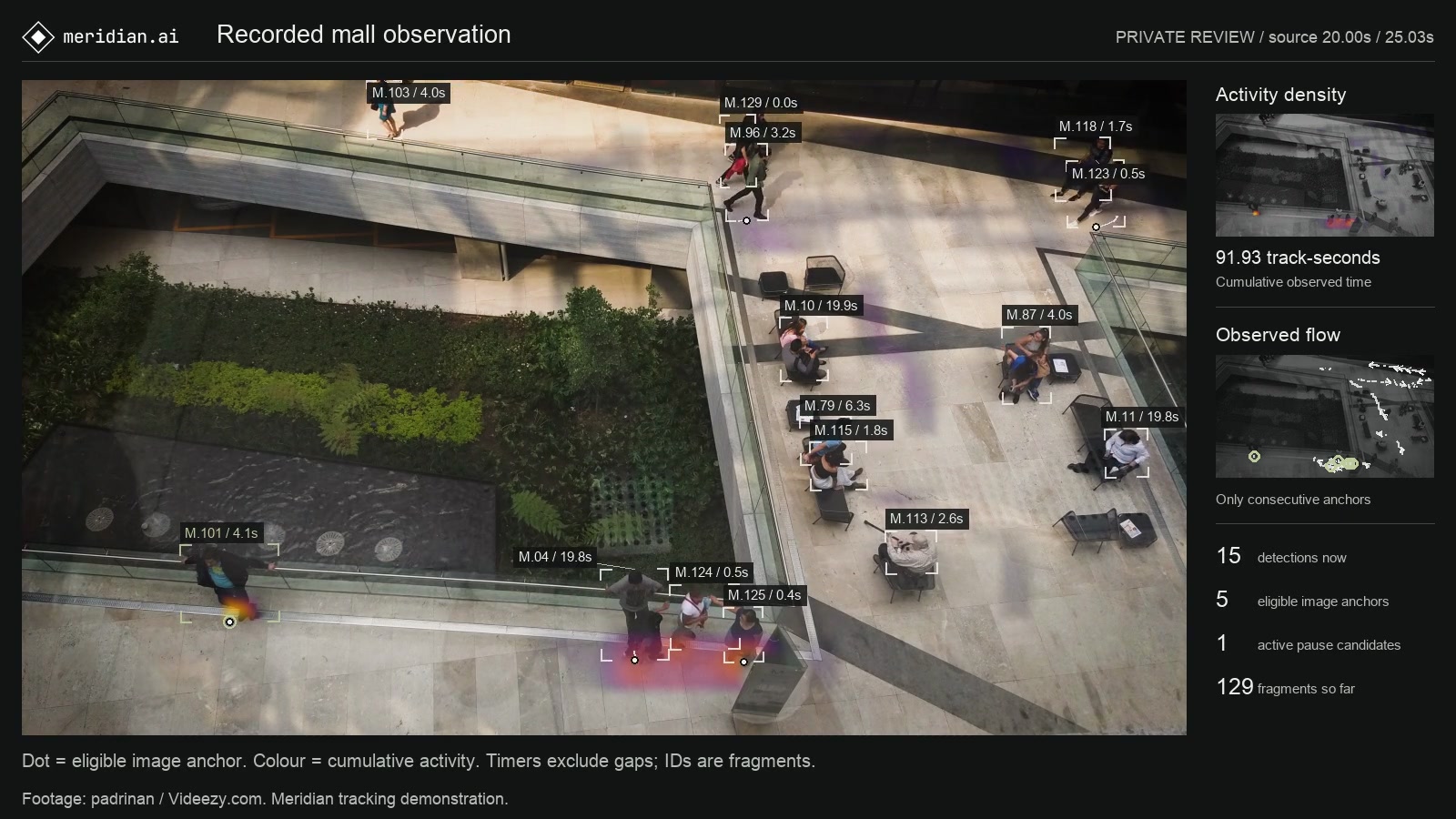
Recorded Meridian shopping-centre analysis: tracking brackets, activity density and movement patterns. The source shows 15 detections and 129 tracking fragments, not unique people.
CAMERA 01 / SHOPPING CENTRESOURCE 20.00s
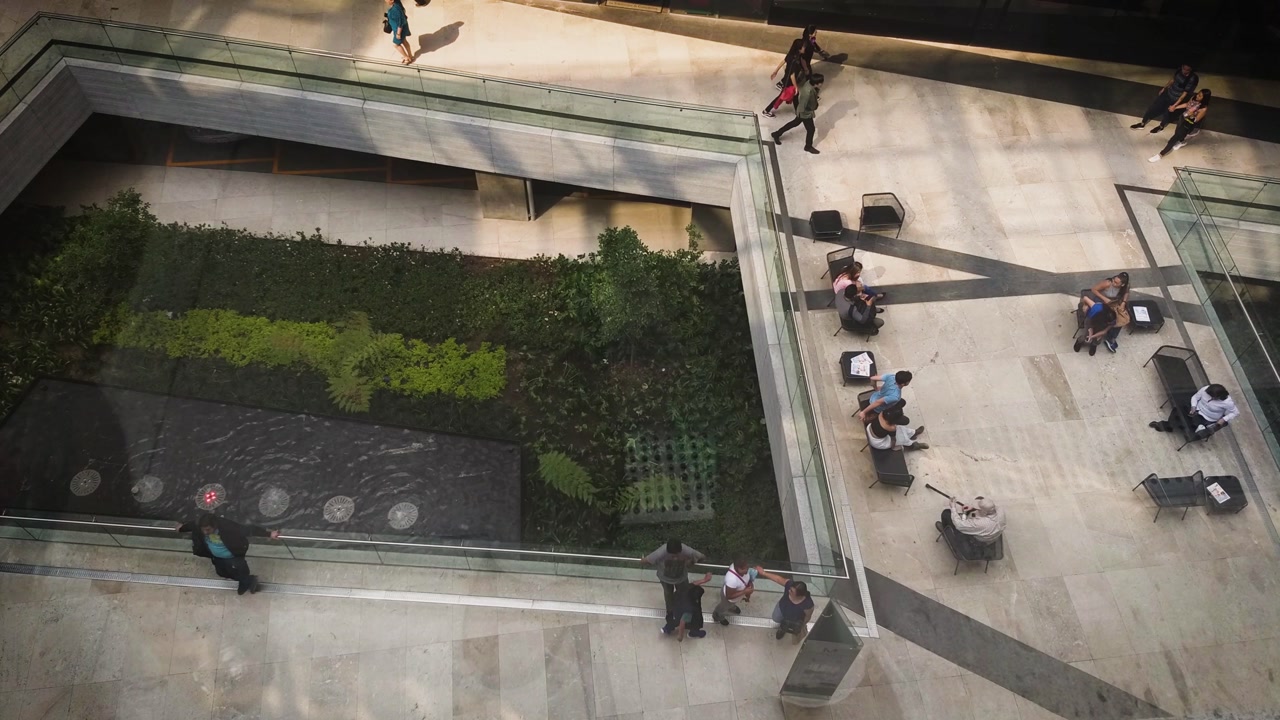
The same recorded shopping-centre moment without analysis overlays.
01 / CameraScroll to reveal. Drag to explore.02 / Intelligence

Tracking. Heatmaps. Movement patterns.Offline recorded demo. Tracking IDs are fragments, not unique people. Footage: padrinan / Videezy.com.

Field notes / 001

Already on the ground.

Australian operators. Actual pilots.
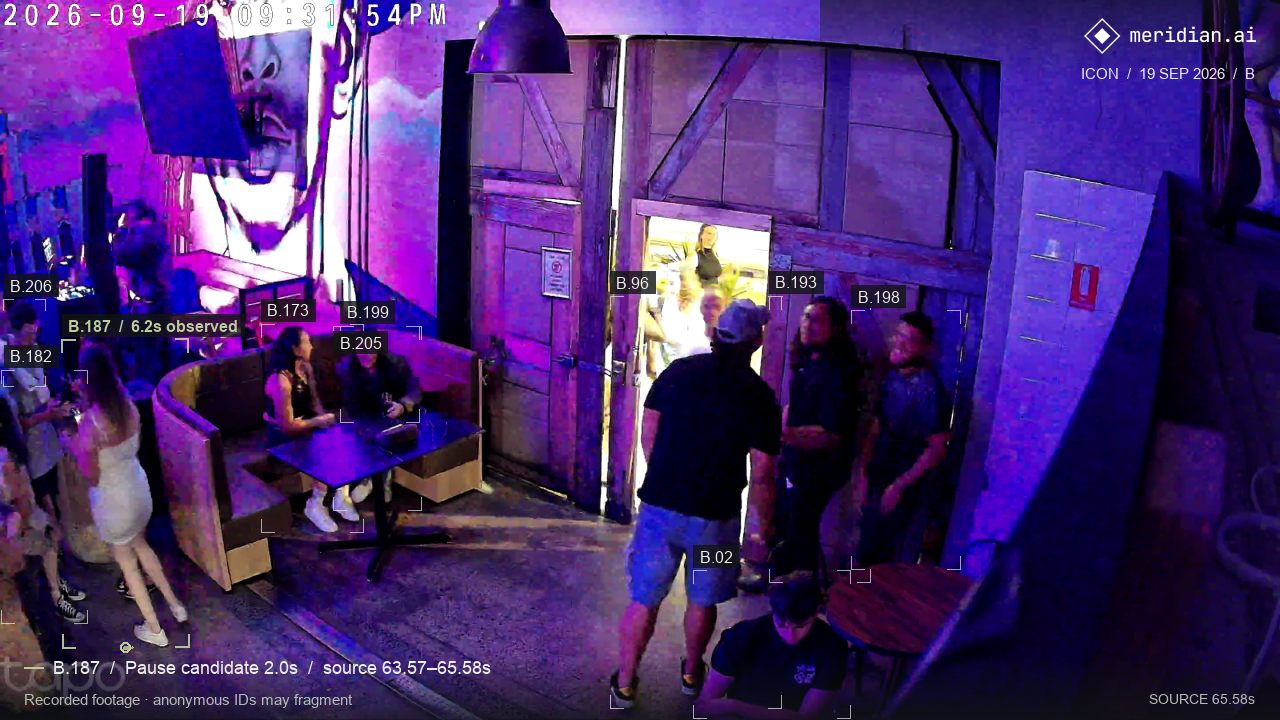
Recorded camera analysis at The Icon on 19 September 2026, with anonymous tracking fragments.
The Icon / Recorded observation / 19 September 2026
The Icon / Wollongong, NSW

Know the night.
Plan the next one.

Entrance reporting gives the team a clearer view of trading patterns across nights and weeks.

2,187recorded IN crossings
24–27 September 2026

Includes repeat entries. Not unique visitors, occupancy or sales. Report limitations apply.

Chopped / Victoria

Post-event activity analysis
for the next operating decision.

“It’s worth paying for to be able to plan future events”Kyle Ford / Chopped

Applications / Built around the operation

Different worlds.
Different decisions.

A venue’s margin. A precinct’s resources. A network’s fare revenue.
The work starts with the problem on your ground.

01 / Venues & live eventsMeridian Tempo

tempo

Run the floor.
Protect the margin.

Connect what is happening in the venue with what is happening in the business.

The connected venue / 45 seconds

Decision intelligence for the whole venue.

Recorded nightclub tracking by Meridian. Venue decision workflows and monthly savings are illustrative.45 seconds · 1080p · Silent

Illustrative monthly estimate

Time back.
Cost out.

One example of what connected operations could unlock.

35h
Admin time returned / month

Reporting 13h
Invoice & stock checks 13h
Roster preparation ≈8.7h

A$1,387
Operating savings / month

Buying: A$26,000 × 3% = A$780
Rostering: 17⅓h × A$35 ≈ A$607

Rounded average month: the existing weekly scenario × 52 ÷ 12. Assumed reductions, not measured customer results. Before Meridian fees and setup. Admin time is excluded from cash savings. Actual outcomes will vary.

Film transcript & footage credits

00:00 · The operating workspace. The operating workspace opens on the supplied nightclub crowd footage, processed with Meridian V7.5.2’s person detector and ByteTrack tracker in offline replay. Brackets show actual confirmed observations on their corresponding frames. These are partial track fragments, not verified occupancy or unique visitors. The surrounding business panels are a separate illustrative venue model. Sample sales are A$1,176 across 28 transactions.

00:08 · Purchasing and stock. A detailed supplier table flags a 700 mL product increasing from A$40 to A$48 per bottle, a 20% rise on the same tax basis. Twelve bottles on hand and eighteen forecast to be needed leave six to reorder. The draft totals A$288, which is A$48 more than at the previous unit price. The price history and stock gap are presented together for review.

00:17 · The team plan. A sample demand profile informs a draft roster with peak cover from 20:00 to 23:00. The illustrative peak forecast is 21:00 to 22:00, with a range of 50–66 entries. Skills, availability and labour cost require manager review. No roster is published.

00:25 · Decision intelligence for venues. Camera activity, POS and sales, invoices, stock and staffing inform one operating plan. Compare suppliers after a price rise. Draft peak cover around demand and availability. The proposed learning loop records approvals and measures labour cost, service and stock outcomes to improve the next plan. Start with manager approval, then automate within agreed limits. These connected and learning workflows are in development; they were not run on this clip.

00:35 · Illustrative savings. Approximately 35 admin hours returned and A$1,387 operating savings per average month. This converts the existing weekly scenario using 52 weeks divided by 12 months. Monthly admin time is 13 hours of reporting, 13 hours of invoice and stock checking, and approximately 8.7 hours of roster preparation. Monthly operating savings assumes A$26,000 purchasing spend reduced by 3% (A$780), plus 17⅓ roster hours avoided at A$35 per hour (approximately A$607). Headlines are rounded; calculations use unrounded values. This is a scenario, not a customer result or validated forecast. Fees and setup are excluded; admin hours are not also counted as cash savings.

00:43 · Meridian Tempo. The whole operation, connected. Camera reporting is in use. Connected workflows remain in development.

Nightclub footage supplied for this edit and processed with Meridian V7.5.2 in offline replay. The full 13.8-second 1080p clip was analysed. An eight-second excerpt opens the film. Low light, flashing lights, camera movement and crowd occlusion limit coverage and fragment tracks. No calibrated occupancy, floor heatmap or business integration was run. The decision workflows, business figures, forecasts and savings remain illustrative. No music or audio track.

Download the film
Download the recorded camera analysis

Camera reporting is in use. POS, invoice and stock connections, trend forecasting and auto rostering are in development.

Meridian Tempo / Venues & live events
02 / Councils & precinctsProposed pilot applications

A place is never still.

Understand how people use it.
Put teams and services where they’re needed.

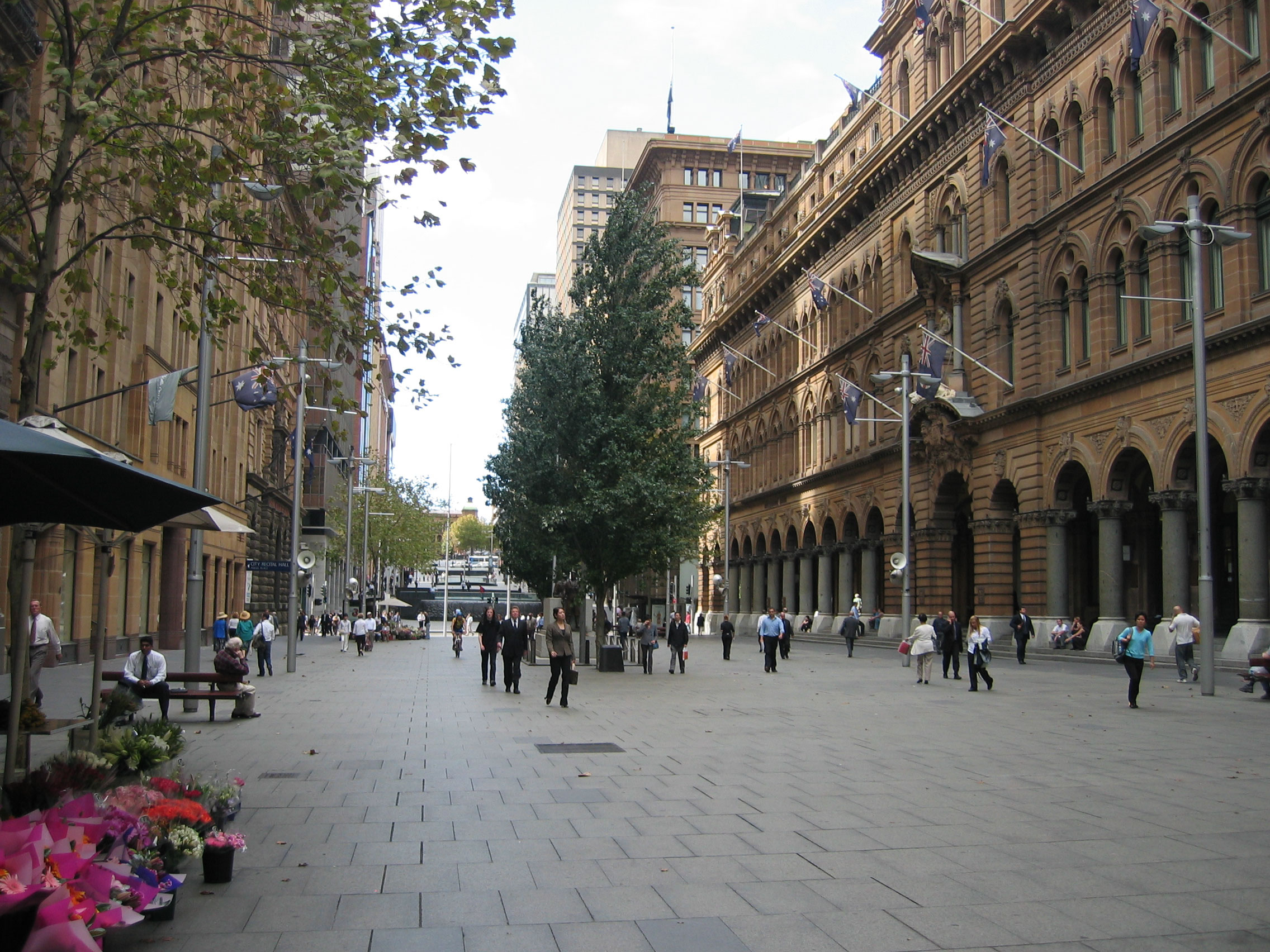
Real photograph of pedestrians walking through Martin Place, Sydney. Illustrative corner brackets align with visible people, with example movement paths beneath them. These annotations are not measured tracking data.
MERIDIAN / PRECINCT VIEWILLUSTRATIVE TRACKING & FLOW
Person detectionMovement paths
MARTIN PLACE / SYDNEY
Real location photography. Person brackets and flow paths are illustrative, not measured tracking or a council deployment.Photo: John Rotenstein, 2005 / public domain.

See where people go.
Put the right resources in the right places.

Proposed council applications: pedestrian activity, event dispersal and cleaning or steward deployment. Each pilot requires validated camera coverage and agreed operating responsibilities.
03 / TransportProposed revenue protection

Make missed fares
harder to miss.

Help reduce fare losses from missed Opal or contactless tap-ons. Compare boarding activity with authorised ticketing data, then direct the team to the gaps worth investigating.

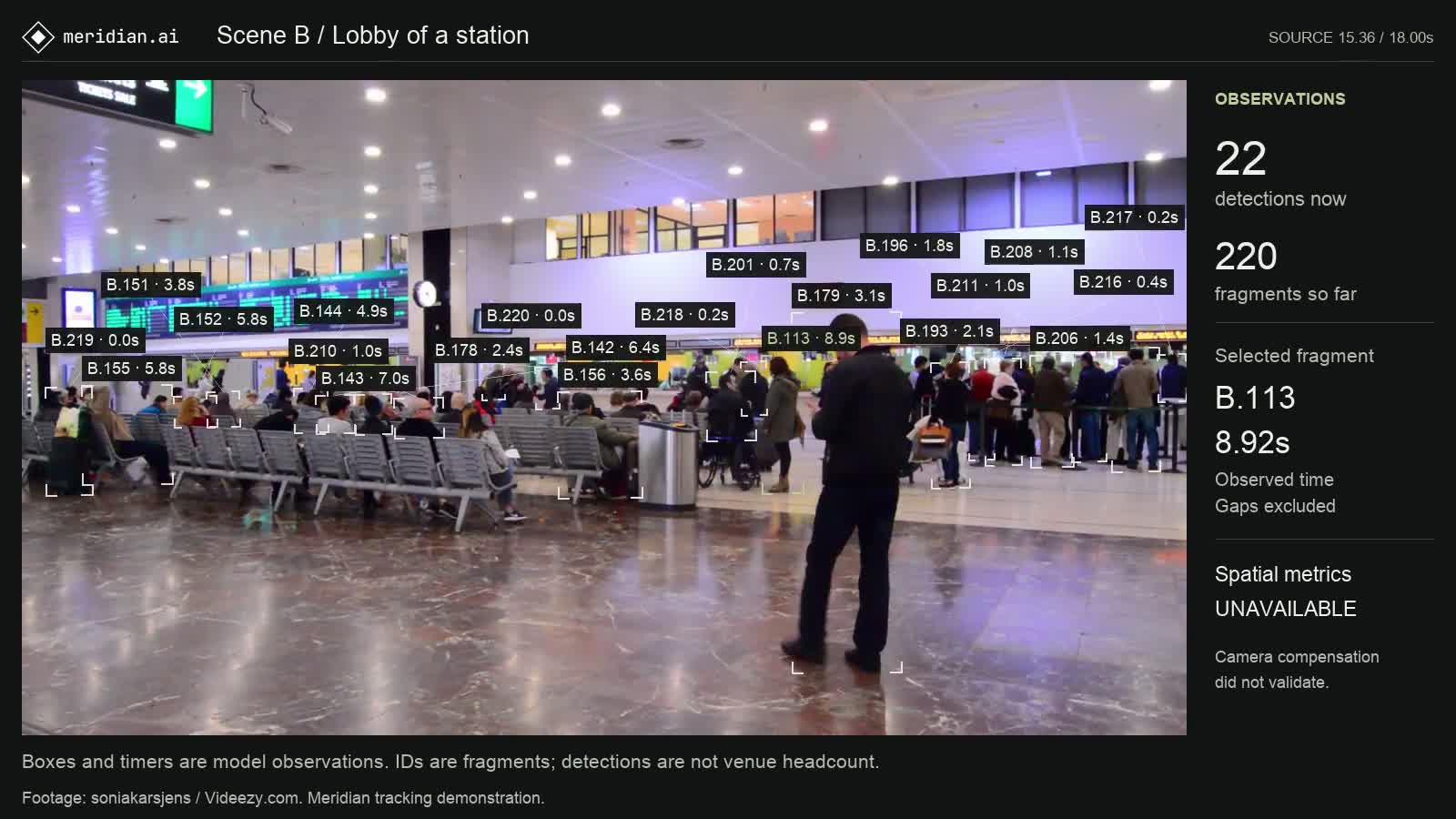
Real station footage processed in Meridian’s recorded demonstration, showing passengers with the original model tracking brackets and fragment timers.
MERIDIAN / STATION OBSERVATIONRECORDED DEMONSTRATION
From the Meridian demoSee the movement.
Understand the demand.
SOURCE FRAME / 15.36s
Original tracking overlays on real recorded footage. IDs are fragments, not unique passengers. This scene does not demonstrate fare detection.Footage: soniakarsjens. Free Stock Footage by Videezy.
The proposed revenue-protection workflowIn development / Requires authorised ticketing data
  1. 01

    Count the boardings.

    Understand passenger activity in a matched service and time window.

  2. 02

    Compare the tap-ons.

    Bring authorised Opal or contactless validation totals into the same view.

  3. 03

    Review the gaps.

    Give the operator a specific window to investigate and act on.

Protect fare revenue.
Understand passenger demand.
Focus the operating response.

Planned capability, requiring operator access and a validated pilot. Other valid tickets, reader faults, timing and count accuracy must be checked. No individual is identified.
The decision layerOur next chapter

Your judgement.
Built into the system.

Learn → Decide → Act

Meridian is being built to learn from the decisions you make and the outcomes that follow. Over time, the goal is for the decision layer to handle routine work itself.

01

You make the call.

Choose an action. Set the limits.

02

The system learns.

Your choices and results build context.

03

The routine moves off your desk.

Authorised actions run. Exceptions return to you.

Less chasing.
More time to run the operation.

Camera reporting is in use today. Learning from decisions and autonomous execution are planned capabilities.

Built in Australia. Built alongside operators.

Start with
your operation.

Tell us what costs your team time, money or missed opportunity. We’ll scope a practical starting point.

Backed by Antler
Talk through your operating question

Discuss a pilot.

Tell us about your operation. Submit your enquiry directly to the Meridian founders.

We use your details to respond to your enquiry. Please do not include footage or sensitive personal information.

For sales and partnerships, contact Tully Myers, COO: tully@meridianai.tech. You can also reach Jack White, CEO, at jack@meridianai.tech.

Chopped / Customer case study

A clearer view for the next event.

The operating question

Kyle identified security as Chopped’s biggest cost. Staffing based on previous events and instinct could leave teams overstaffed or understaffed at different times.

What the pilot revealed

Post-event camera activity analysis gave Kyle another view of movement through busy spaces. He reported more movement than expected and saw value in using that evidence to plan future events.

The next decision

Kyle wants to review guard deployment and staffing across entry, merchandise, the waiver tent, bars and cleaning, supported by broader camera coverage. He expressed willingness to pay and intent to use Meridian again.

What is established

The case study documents customer feedback and future intent. Commercial scope and terms are not established, and savings have not been measured. The pilot included recording gaps; unique attendance and live occupancy accuracy remain unvalidated.

Source: Kyle Ford’s written feedback, 30 September 2026, approved for public and investor case studies.

The Icon / September 2026

A real report: The Icon.

The operating question

How does arrival activity change between nights, and which changes should the venue investigate?

Historical pilot report / September 2026

1,37910–13 Sep
1,65517–20 Sep
2,18724–27 Sep

Recorded IN crossings. Repeat entries are included.

What Meridian recorded

The entrance system recorded 1,379, 1,655 and 2,187 IN crossings across 10–13, 17–20 and 24–27 September 2026. Friday 25 September recorded 607 entries, compared with 234 on the previous Friday. Saturday was the highest-entry day in every window.

From observation to review

The report gives the team a specific period to compare with event calendars, bookings and rosters. It identifies questions for an operating review; it does not establish what caused the increase or claim that Meridian increased attendance.

How to read the evidence

Counts include re-entries and are not unique visitors, live occupancy or sales. The review uses a provisional 06:00 trading-day boundary. The source clock timezone was assumed, and historical calibration comparability was unverified. These differences may affect comparisons. Current live collection has not been verified. Interior and bar streams were not reliable enough for room comparisons.

Source: The Icon activity report and owner/GM summary, 30 September 2026.

Our conviction

Close to the problem.

Meridian is an Antler-backed Australian company, led by Jack White, CEO, and Tully Myers, COO. Tully leads sales and partnerships. We build alongside operators, from installing edge devices to understanding what the data means for the next shift.

Jack: jack@meridianai.tech
Tully: tully@meridianai.tech

Tempo is Meridian AI’s venue product: camera activity reporting today, with invoice and stock tracking, supplier price alerts, trend forecasting and auto rostering in development.

We are building decision intelligence for physical operations: connecting observations with business context, learning from operators’ decisions and measuring the outcomes. The long-term goal is a decision layer that makes and carries out routine decisions itself, reducing the need for repeated human involvement. Each application starts with a different operating question: trading demand and margins for venues, public-space activity and event dispersal for councils, passenger demand and potential fare losses for transport. Council and transport workflows are scoped pilot applications, not established deployments.

Understand activity. Respect people.

People analytics focus on counts and activity, without facial recognition, biometric identity templates or cross-venue person tracking.

Work with the infrastructure you have.

Assess camera coverage, agree the measurements and deploy on-site processing. Recording, access and retention are defined for each deployment.

Set the direction. Delegate the routine.

You define the goals and operating limits. Our goal is for Meridian to learn from your decisions and progressively take over authorised routine workflows, with exceptions brought back to your team. Learning and autonomous execution are planned capabilities.

Questions, answered

A clearer starting point.

How does Meridian differ by industry?

Tempo focuses on venue trading patterns, purchasing, stock and staffing. Council applications focus on public-space use, event dispersal and resource planning. Transport applications focus on passenger demand and revenue protection, including potential missed Opal or contactless tap-ons where authorised validation data is available. They share an observation and decision workflow, but the data, operating decisions and success measures are scoped separately. Council and transport applications are proposed pilots.

What can Meridian do today?

Deployed pilots and reporting have captured entrance activity and scoped camera observations. The Icon case study supports historical entrance-pattern analysis; Chopped adds post-event activity analysis and customer feedback. Each deployment needs its own measurement validation.

How does real-time decision support fit in?

Real-time decisions are the direction of the platform. We are developing connections between camera observations, sales, invoices, stock and staffing, with supplier price alerts, demand forecasting and automatically drafted rosters. The initial stage keeps managers involved in reviewing proposed actions. Over time, the goal is to learn from those decisions and automate authorised routine workflows. These integrations and workflows are in development; the case studies demonstrate deployed pilots and historical review.

Will Meridian eventually make decisions itself?

Yes. That is the direction of the decision layer: learn from the decisions you make, the corrections you give and the outcomes that follow. As workflows are validated and you authorise them, the goal is for Meridian to choose and execute routine actions itself. You set the goals, permissions and limits, while the system handles the repeated work and flags exceptions. Learning from decisions and autonomous execution are planned, not live capabilities today.

How would Meridian connect to the rest of the business?

The planned approach is to connect sources the business authorises, such as POS exports, accounting data, invoices, rosters, inventory and selected operational emails. Connection methods and access are agreed per deployment. The website does not connect to, read or change those systems.

Can Meridian detect missed Opal tap-ons?

This is a proposed transport capability. The intended workflow compares boarding counts with authorised Opal and contactless validation totals for a matched service and time window, then flags gaps for operator review. A mismatch alone does not prove fare evasion: other valid tickets, reader faults, timing and count accuracy need to be checked. There is no live Opal integration or TfNSW deployment being claimed, and no individual is identified. About Opal and accepted payment methods.

Can we use our existing cameras?

Where compatible and suitably positioned. We assess coverage against the measurements you need, then agree any additional cameras, on-site equipment and setup.

How are deployments priced?

Deployment and ongoing support are scoped to the site, camera coverage and operating questions. A conversation with the founders is the starting point for a tailored proposal.

Is footage recorded or uploaded?

Vision processing runs on site. Recording, diagnostic footage, remote access and retention are defined in the deployment scope. Existing CCTV or camera-cloud services may record independently.

Privacy

Website data & enquiries.

The enquiry form securely sends your name, work email, organisation and message to Meridian for business enquiries. Submissions are stored privately with our hosting provider in Australia, and may be forwarded to our founders using an email delivery provider. We use the information to respond, do not publish it and can delete it on request. Please do not include footage or sensitive personal information.

Our hosting provider may receive technical information such as your IP address. This page does not add advertising trackers. Product data handling is agreed separately for each deployment.

To ask about access, correction or deletion of enquiry information, contact jack@meridianai.tech.

Recorded demonstration

Shopping-centre observation.

On a smaller screen, scroll across the image to inspect the tracking and analysis.

Meridian recorded shopping-centre demonstration at source time 20 seconds, showing tracking fragments, activity density and observed flow.

Recorded offline demonstration. Tracking IDs are fragments, not unique people. Footage: padrinan / Videezy.com.